
TAP Alumni Experience the Supreme Court Up Close
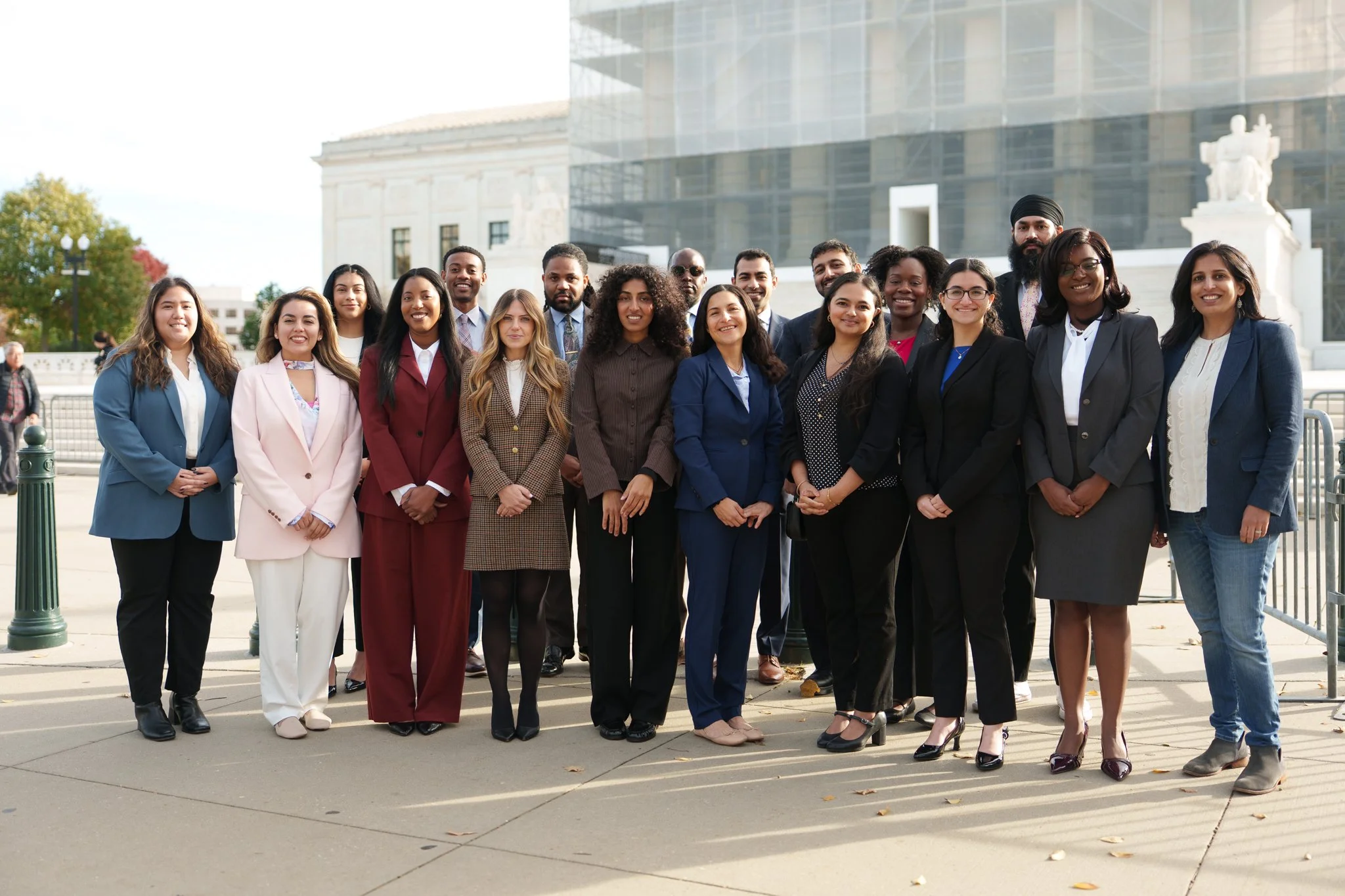
On November 4, more than a dozen TAP alumni gathered in Washington, D.C. to hear oral arguments at the U.S. Supreme Court—an opportunity designed to demystify appellate practice, build community, and help emerging advocates envision themselves in spaces of legal power.
At a moment when appellate decisions are shaping fundamental questions of democracy, rights, and representation, TAP created this experience to give alumni access to a space that has historically been closed to many first-generation and underrepresented lawyers. Throughout the day, participants observed oral arguments, connected with fellow alumni, and reflected on what it means to imagine themselves as future Supreme Court advocates, clerks, and even judges.
Oral Arguments and Lunch Debrief
The group observed oral arguments in Coney Island Auto Parts Unlimited, Inc. v. Burton and Hain Celestial Group, Inc. v. Palmquist, cases that touched broadly on civil procedure and the kinds of doctrinal questions that shape everyday access to justice.
For many attendees, this was their first time witnessing Supreme Court arguments live. “It is an honor and a privilege to even be at the United States Supreme Court, and I’d guess it’s every attorney’s dream to argue before the Court one day—it’s definitely mine,” said Laila Kassis, an associate at Kirkland & Ellis LLP and a TAP Mentorship Program alum from the inaugural cohort.
Over lunch, TAP alumni dove into what they had just witnessed—comparing notes on the advocates’ approaches, the structure of the arguments, and the Justices’ differing styles.
Conversation flowed around topics such as:
How advocates framed their core themes
The pacing and tone each attorney used at the lectern
Differences in questioning styles between the Justices
How the strategic posture of appellate cases differs from trial-level work
Why TAP Created This Opportunity
Visiting the Court in person remains out of reach for many students and young lawyers, especially those without generational access to the profession. TAP designed this experience to change that reality—and to put our program pillars into action in a meaningful, tangible way:
Community: Create space for alumni to connect with one another and see—through proximity and presence—that our highest courts can and should reflect the diverse lived experiences of all our communities.
Training: Provide a hands-on appellate learning opportunity where attendees could observe live arguments, study leading advocates, and deepen their understanding of how the Supreme Court shapes doctrine.
Access: Open doors that have historically been closed, giving emerging leaders the chance to step inside the Court, build confidence in these spaces, and envision themselves as future clerks, advocates, or judges.
Awareness: Reinforce why representation in appellate courts matters—not only for the legitimacy of the law, but for the health of our democracy.
“I’m incredibly appreciative of TAP and the role it’s played in my career trajectory so far, and of the influence it’s having not only for us individually, but collectively as a community of Black and brown law students and lawyers who are trying to make positive change in our country,” said Michael Harding, a law clerk at the Eastern District of Pennsylvania and a member of TAP’s inaugural Mentorship Program cohort. “Having these connections and this network not only helps us identify resources and access opportunities, it allows us to build meaningful relationships in the profession and to see one another in these roles—as judges, practitioners, and law clerks.”
Why Moments Like This Matter
Experiences like this visit to the Supreme Court are made possible because our community believes in expanding who gets to shape the law. We do not believe that having representation in our highest courts is a political issue—it’s a common-sense issue, and a democracy issue. Every opportunity we create—every mentor pairing, every training, every moment of access—helps ensure our appellate system reflects the full diversity, talent, and lived experience of our nation.
Continued support for TAP’s work allows us to open more doors, strengthen our alumni network, and equip the next generation of advocates to lead with excellence, purpose, and the deep understanding that our courts function best when they reflect the people they serve.
